
China Casual Socks Manufacturer Tips for Sourcing Quality Products
2026-09-21
Sourcing casual socks from China often means sifting through countless factories that promise quality but deliver disappointment. A trusted partner like Fuli Socks changes that equation. This guide lays out practical tips for evaluating materials, stitching, and supplier reliability, so you can skip the trial-and-error and secure socks your customers will actually want to reorder.
What a Real Sock Factory Floor Reveals in the First Five Minutes
The first five minutes on a real sock factory floor don't begin with a manager's tour. They begin with a wave of warm air and the uneven clatter of a hundred knitting machines running at slightly different speeds. Some have newer needles and tighter belts; others carry the dull pitch of a motor that's been patched twice. That difference in sound is your first clue: the floor is not a single optimized system but a living collection of compromises, all kept close to tolerance by people who know each machine's quirks.
Watch an operator near the boarding area and you'll see a rhythm that no camera system captures. She picks up a sock, checks the heel by feel rather than sight, and either folds it into a cart or drops it into a plastic crate with no label. That crate isn't scrap—it's queue for rework. The overhead lights over her table are angled to create shadows across thin spots. A visitor might call it harsh; the people who work there call it honest.
By minute five, the strange details start to explain themselves. The floor is warmer than you'd expect, but that's deliberate: cotton and elastane handle differently when the room stays above a certain temperature. The carts look scattered, yet each has a hand-taped code that tracks lot, size, and operator. The real factory floor doesn't hide its rough edges, and that's exactly what makes the production credible.
Yarn Blends That Look Good on Paper but Fail After Ten Washes
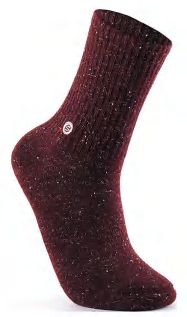
Yarn blends often look great on a spec sheet: 50% merino for softness, 50% acrylic for easy care, or maybe cotton mixed with bamboo for sheen. The problem shows up after the tenth wash. The fibers don’t age at the same rate, so you get a fabric that starts to feel lumpy and uneven. The soft halo that felt so nice on day one turns into a scratchy, irregular fuzz. Colors that were rich at first glance lose depth because the synthetic fibers hold dye differently from the natural ones.
The real issue is abrasion and fiber migration. Short-staple cotton or low-twist yarns might pass a quick hand feel test, but repeated agitation forces the weaker fibers to break loose. In a cotton/acrylic blend, the acrylic pills into tiny balls while the cotton thins out around them. A wool/nylon blend can look resilient but after ten washes the nylon starts to poke through as the wool felts slightly, leaving you with a brittle, boardy texture. Even bamboo blends, which are marketed as silky, often develop a dull, matted surface because the bamboo fibers slip and tangle.
So if you’re choosing a yarn for something that will actually be washed regularly, don’t trust the label alone. Bend the fabric in your hand, rub it against itself a few times, and look at the twist. A tightly plied yarn with longer staple fibers tends to survive repeated laundering better, regardless of how impressive the blend ratio sounds.
Turning a Pre-Production Sample Into a Binding Quality Standard
Locking a pre-production sample into a contractual benchmark rarely happens by accident. It starts with selecting the exact unit that survived fit, finish, and function reviews, then sealing it in a controlled environment with a tamper-evident label. That physical reference becomes the visual and tactile anchor for every later batch, but it only works if the sample's deviations are written down—stitch density, surface grain, edge tolerance, or torque limits—rather than left to memory.
The next step is converting those observations into a format that can be shared without ambiguity. A one-page photo sheet or annotated CAD overlay often carries more weight than a dense spec document, because it forces the supplier to confirm the same corner radius, gloss level, or spring force that the buyer approved. Once both parties sign off, the sample is no longer just a nice example; it is the default answer when a production unit lands in a gray zone.
Maintaining that authority requires an update path. If a material substitution or tooling revision is accepted, the new sample should pass through the same measurement and sign-off loop, and the old reference must be retired or clearly marked as obsolete. Otherwise, factories quietly drift toward the most forgiving samples on the shelf, and the standard loses its binding power.
When Cheaper Unit Prices Start Eating Your Margin in Hidden Ways
A lower unit price from a supplier feels like a win at first glance. The spreadsheet lights up green, and the procurement team gets a nod. But the real cost often hides in places that never show up on the invoice. Think about higher defect rates that trigger rework, longer lead times that force you to keep extra safety stock, or packaging that doesn't survive transit. Each of those quietly chips away at the margin you thought you'd gained.
There's also a psychological trap. Once you lock into a cheaper unit, you start making decisions around that number. You order larger batches to hit freight minimums, you accept odd lot sizes, or you stretch payment terms and lose early-pay discounts. The purchasing department celebrates the price, while the warehouse manager struggles with pallets that don't stack properly and the finance team watches cash get tied up in inventory that moves slower than expected.
The hidden margin erosion doesn't stop there. Cheaper components often mean more variance in quality, which forces you to add inspection steps or deal with more customer returns. Your support team spends extra hours on complaints, and your brand takes a subtle hit that's hard to quantify. When you tally up the true landed cost—including rework, scrap, expedited shipping for replacements, and lost repeat purchases—that "cheaper" unit price can end up costing far more than the premium alternative you passed over.
Building a Repeatable QC Routine That Your Factory Actually Follows
Most quality checklists end up taped to a wall near the shipping dock, untouched until an audit forces someone to blow off the dust. The problem isn't the list itself but how it was introduced. A routine only sticks when the people running the line had a hand in shaping it. Ask the operators where defects actually slip through, and you'll often get answers that never show up in the original procedure.
Start with a single, small loop: one line, one shift, one critical check repeated every hour. Let the team time it themselves and trim whatever feels redundant. Once that loop becomes muscle memory, add the next checkpoint. Skipping this gradual build is why factories jump from 'we trained everyone on the new SOP' to 'nobody filled out the form last week.'
Make the routine impossible to fake by tying it to the product, not the paperwork. For example, the QC sign-off should happen before the cart moves to the next station, not at the end of the day from memory. When the check is a physical gate rather than a formality, following it becomes the path of least resistance. And if a step keeps getting skipped, treat that as data about the step, not the worker.
Negotiating Order Terms That Protect You Beyond the First Shipment
Many buyers focus intensely on unit price and delivery dates for the first order, then assume those terms automatically carry forward. That assumption is expensive. Pull out the initial quote and mark every blank that matters: raw material specs, tolerance ranges, packaging standards, defect liability, lead time windows, and what happens when any of those slip. Then insert a simple clause stating that these definitions, not just the quantities on page one, remain binding for all subsequent releases unless both parties sign a written amendment. If the supplier pushes back, ask which line they intend to change—because that tells you where future problems will surface.
Also lock in a reorder mechanism that resets expectations rather than relying on memory. Include a “repeat order terms” attachment that freezes current pricing for a defined volume or period, sets a maximum annual increase with documented cost drivers, and requires re-approval of any substituted component or process. Add a non-conformance credit schedule that escalates with repeated failures, not just one-off returns. And avoid evergreen clauses that renew automatically without a quality review meeting. The point isn’t to punish the supplier; it’s to make the second, third, and tenth shipment as accountable as the first one you audited in person.
FAQ
Request a physical sample before placing any bulk order, but don't stop there. Ask for their compliance certificates (like BSCI or ISO 9001) and, if possible, commission a third-party audit of the factory floor. Look at the stitching on the toe seam and the elasticity of the cuff—these details reveal whether they cut corners on machinery or materials.
For everyday casual socks, combed cotton and bamboo viscose blends offer the best balance of softness, breathability, and durability. If you're targeting a premium market, consider merino wool or a cotton-polyester blend with reinforced heel and toe areas. Always ask for the yarn count and fabric weight, because a low yarn count can make even high-quality cotton feel rough.
One major trap is assuming the quoted price covers everything. Clarify whether the cost includes packaging, labeling, and domestic freight to the port. Another pitfall is accepting the factory's default sizing chart without testing it—Chinese foot shapes differ from Western ones, so always request graded size samples for each market you plan to sell in.
Insist on a detailed spec sheet that includes not just dimensions but also stretch tolerance and washing shrinkage rates. Then, before each bulk run, have the factory send a pre-production sample and compare it against your approved golden sample. Randomly pull 5-10 pairs from the first finished batch and measure them yourself before authorizing shipment.
A trading company can simplify communication and handle logistics, but it adds a markup and reduces your control over production changes. A direct factory relationship gives you better pricing and the ability to adjust designs quickly, but you'll need to manage language barriers and quality checks yourself. If your order volume is below 5,000 pairs per style, a reputable trading company is often more practical.
Never skip a pre-shipment inspection. Hire a third-party QC agency to randomly sample at least 20% of the cartons using AQL 2.5 standards. Have them check for loose threads, uneven dye lots, improper labeling, and packing accuracy. Also request a copy of the factory's internal inspection records—if they can't provide them, that's a red flag.
Conclusion
Walking through a sock factory in China, the first five minutes tell you more than any catalog ever will. You can spot how yarn is stored, whether machines are maintained, and if workers handle materials with care—those details directly predict how your casual socks will hold up. One common mistake is approving a yarn blend because it feels soft in the showroom, only to find it pills or loses shape after ten washes. Instead, ask for a pre-production sample and turn it into a binding reference: lock in exact fiber percentages, knitting density, and colorfastness, so the factory cannot quietly swap in cheaper inputs later.
The second half of sourcing success is controlling costs and behavior after the order is placed. A lower unit price often hides extra charges for packaging, labeling, or logistics, and those small leaks can erase your margin faster than a price hike. Build a repeatable QC routine that your factory actually agrees to follow—something as simple as checking random pairs from the middle of each carton at the sealing stage, not just the top layer. Finally, negotiate terms that protect you beyond the first shipment: define defect rates, replacement timelines, and payment holds for late or substandard goods. That way, you are not renegotiating from scratch every time a new batch arrives.
Contact Us
Contact Person: Ryan Li
Email: [email protected]
Tel/WhatsApp: +86 13757342500
Website: https://www.fulisocks.com/