Custom Anti-UV Polyester Dope Dyed Filament Yarn for Durable Outdoor Fabrics
2026-08-15
Sun, rain, and UV rays punish outdoor fabrics long before they show visible wear. The difference often comes down to the yarn itself. Custom anti-UV polyester dope dyed filament yarn from Changshu Polyester is formulated to resist fading and fiber degradation in demanding outdoor applications—think awnings, marine covers, and heavy-duty upholstery. If durability is non-negotiable, this is where it starts.
Putting UV Blockers Inside the Polyester Itself
Most outdoor fabrics rely on surface coatings to fend off ultraviolet light, but those thin layers wear away after months of sun, rain, and friction. Instead of accepting that slow degradation, some manufacturers now mix UV absorbers directly into the polyester resin before the fibers are even spun. This means the protection isn't sitting on the outside like a fragile shell—it's distributed evenly through every filament, from the core to the surface.
The chemistry behind this approach often uses benzotriazole or hindered amine light stabilizers, which interrupt the photodegradation chain reaction inside the polymer. As UV photons strike the fiber, these additives absorb the energy and release it as harmless heat, preventing the polyester chains from breaking apart. Because the blockers are part of the material itself, they can't be rubbed off, washed out, or scraped away by abrasion, so the fabric keeps its strength and color far longer than coated alternatives.
In real-world use, this built-in shielding makes a noticeable difference for awnings, boat covers, and outdoor furniture that sit under harsh sunlight for years. The fabric may still fade slightly from surface dirt or dye breakdown, but the structural integrity remains intact. And since there's no topical finish to reapply or maintain, end users get a quieter kind of longevity—one that doesn't demand extra care, just does its job from the inside out.
Why Filament Yarn Is the Backbone of Durable Outdoor Fabric
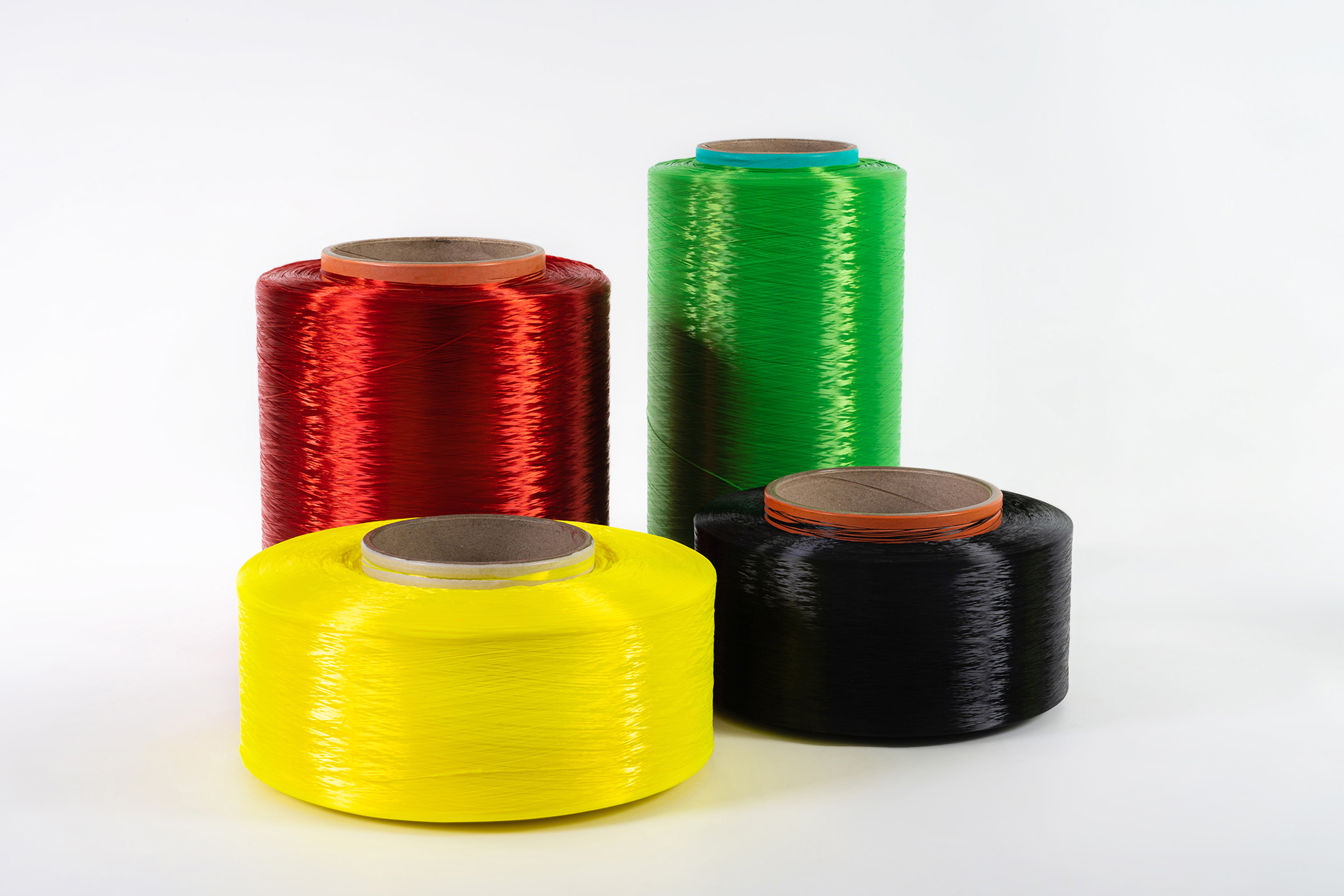
Think about the last time a patio cushion or a boat cover gave out. More often than not, the culprit wasn't the fabric's coating or UV treatment — it was the yarn underneath. Filament yarn, made from continuous strands rather than short staple fibers, creates a surface with almost no loose ends. That simple difference means fewer weak points where abrasion can start, where moisture can wick in, and where the fabric begins to fail under constant tension.
In outdoor environments, everything works against the material: sunlight, rain, wind, salt, and the repeated stress of being pulled, folded, or walked on. Filament yarn responds with exceptional tensile strength and low elongation, so the fabric holds its shape and doesn't sag or stretch out of spec. It also resists pilling and fuzzing, which keeps the surface smooth and less likely to trap dirt or mildew. For manufacturers, that translates into products that survive multiple seasons without looking worn out.
What really sets filament yarn apart, though, is how it pairs with modern coating and finishing techniques. Because the yarn is dense and uniform, coatings adhere more evenly and create a stronger bond. That synergy gives outdoor fabric its waterproof, fade-resistant, and tear-resistant qualities — all starting from the backbone of continuous filament construction.
Matching Your Exact Color and Denier Before Production
We'll start by sending you a set of physical swatches—not just digital previews—so you can see the exact shade under your own lighting. If you already have a target color, we match it to a Pantone reference or a custom dye lot, then run a small lab dip. You'll get to approve that before anything moves to the bulk yarn.
Denier isn't just a number; it changes how the fabric feels, how sheer it appears, and how it stretches. Tell us the denier you need—say, 15 for a barely-there look or 70 for more opacity—and we'll source the right filament count. We then knit a short sample strip and send it back to you folded next to your original reference so you can compare thickness and transparency side by side.
Once you've signed off on both the color and denier, we lock those specs into a production ticket. Any future reorders can reference that same ticket, which keeps the shade and hand feel consistent from one batch to the next. Small tweaks are still possible at this stage, but we'd rather iron them out in a single confirmation round than deal with mismatched stock later.
How Dope Dyeing Cuts Waste Without a Dye Bath
In conventional textile production, fabric is woven or knitted first, then submerged in massive baths of water, chemicals, and dye. This wet processing stage accounts for a staggering share of the industry’s water consumption and wastewater discharge. Dope dyeing flips that sequence entirely. Pigment is mixed directly into the polymer melt or spinning solution before the fiber is even formed, so the color becomes part of the filament itself. By skipping the dye bath altogether, manufacturers avoid the need to heat thousands of liters of water, dose synthetic dyes, and later treat effluent loaded with unfixed colorants. The result is a fiber that emerges from the spinneret already fully colored, ready for knitting or weaving without any additional wet coloring step.
The waste reduction goes beyond just saved water. Traditional piece dyeing often sees 10 to 20 percent of dye fail to bond with the fabric, ending up in rinse water and eventually in treatment plants or natural waterways. Dope dyeing eliminates that unfixed dye problem because the pigment is locked inside the polymer matrix during extrusion. There is no excess dye to wash off, no salt or leveling agents needed to push color into the fiber, and no repeated rinsing cycles to strip away residual chemistry. For mills, this translates into fewer chemicals purchased, less energy spent on drying and wastewater treatment, and a dramatically smaller environmental footprint per kilogram of colored fabric.
Dope dyeing also trims waste in the form of unsold inventory. Brands that rely on traditional dyeing must forecast color trends months in advance and commit to large dye lots. If a shade misses the market, entire batches of dyed fabric can end up as deadstock. With dope dyeing, the colored fiber is produced only when needed, and because the pigment is integral to the polymer, the colorfastness is often superior to surface dyeing, reducing returns and extending garment life. This shift from after-the-fact coloring to built-in color represents a quieter kind of waste reduction: less overproduction, fewer chemical inputs, and a production line that no longer depends on a dye bath to deliver its palette.
Built to Withstand Sun Salt and Abrasion
Months of unfiltered sun can bleach most materials into brittle shells, and salt spray works its way into every seam. This fabric was treated with a UV-stabilized coating that keeps the fibers flexible long after unprotected alternatives have cracked. The underside carries a micro-porous layer that lets moisture escape without letting salt crystals lodge against the threads.
Abrasion gets the same attention. Instead of relying on a single thick outer layer that shows every scuff, the surface uses a dense, low-profile weave that distributes friction across hundreds of tiny contact points. In practical terms, that means sand grinding under a boot or gear shifting across a deck won't tear through the material the way it does on smooth, coated panels.
We left test panels out through a full season of wind, salt haze, and foot traffic. The color shifted slightly—that's expected—but the stitching held, the coating didn't peel, and the high-wear zones showed only a light polishing rather than exposed fibers. That's the difference between something built to survive and something built to last.
From Shade Sails to Gear Bags Real Applications
Many backyards and restaurant patios now rely on custom-cut shade sails that stretch over seating areas without blocking airflow. The material holds up through intense UV exposure and sudden downpours, so owners don't have to take them down every season. Some setups use triangular sails anchored to existing walls, while freestanding posts create larger covered zones for playgrounds or parking spots.
Gear bags made from the same rugged fabric show up in car trunks, kayak hatches, and tool sheds. Unlike stiff plastic cases, these bags fold flat when empty and shrug off scuffs from gravel or saltwater. Repair shops and field technicians often prefer them because a torn strap can be sewn back on in minutes instead of replacing an entire hard shell.
Between those extremes, the fabric covers everything from motorcycle covers to greenhouse shade cloth. A single roll can be cut into awnings for food trucks, dust covers for construction equipment, or even temporary partitions at outdoor events. The real appeal lies in how easily the material adapts to odd shapes without needing specialized hardware.
FAQ
Dope dyed means pigment is added directly into the polymer melt before the filament is spun, so the color becomes part of the fiber itself. With regular yarn, dye is applied after spinning and only sits on the surface. That difference gives dope dyed yarn much stronger colorfastness and keeps the filament strength from being damaged by harsh dye baths.
Yes, customization covers filament count, denier, cross-section shape, UV stabilizer loading, and exact color matching. A manufacturer can adjust these variables to hit the tensile strength, abrasion resistance, or shade you need without sacrificing long-term outdoor performance.
Constant sun exposure weakens standard polyester and fades colors quickly. In this yarn, UV stabilizers are compounded into the melt along with the pigment, so the protection runs through the entire filament instead of being a surface coating. That means it won't wash off or wear away after repeated cleaning and weathering.
It appears in awnings, outdoor furniture upholstery, marine covers, shade sails, automotive soft tops, and heavy-duty tarps. Any fabric that has to hold its strength and color under direct sun, rain, and temperature swings benefits from a dope dyed UV-stable polyester filament.
Not really for outdoor applications. A wide spectrum of colors can be produced, including bright shades and deep tones, because the pigment is selected before extrusion. The key difference is that the color is locked into the polymer, which keeps it more uniform batch to batch and far more fade-resistant than surface-dyed yarn.
Dope dyeing eliminates the water-intensive dye bath and post-dye washing steps completely. That directly cuts water use, energy consumption, and chemical discharge compared to traditional piece dyeing. Since the color also lasts longer outdoors, end products don't need to be replaced as often.
Ask for UV test data such as QUV or Xenon arc hours, colorfastness to light ratings, and breaking strength before and after accelerated weathering. Also confirm batch-to-batch consistency in denier and filament count, and make sure the anti-UV package is designed for the specific climate where the fabric will be used.
Yes, it works in both processes if the denier and filament configuration are matched correctly. Heavier deniers give the structure needed for woven canvas or sailcloth, while finer filament counts can be knitted into breathable mesh or upholstery fabrics without losing durability.
Conclusion
Outdoor fabrics fail for predictable reasons: sun degrades the polymer, dye baths fade, and weak fibers tear under stress. Custom anti-UV polyester dope dyed filament yarn addresses these problems at the source. Instead of coating fabric with a UV finish that washes away, UV blockers are compounded directly into the polyester resin before spinning. This means every filament carries built-in protection, not just a surface layer. Filament yarn, with its continuous length and uniform cross-section, gives the fabric a dense, abrasion-resistant structure that staple-spun alternatives can't match. And because color is added during the same melt-spinning process, there's no dye bath to pollute water or leave uneven shade. You spec the exact color and denier before production begins, so the yarn arrives ready to weave or knit into fabric that meets your design load and look.
The practical payoff shows up in harsh environments. Sun, salt spray, sand, and repeated flexing take a toll on ordinary materials, but dope dyed polyester filament resists fading and strength loss season after season. No post-dyeing also means less water, energy, and chemical waste, which keeps production lean. Real applications span shade sails that block UV for years without turning brittle, outdoor furniture covers, marine canvas, and gear bags dragged across rocks. Because the UV protection is part of the polymer structure, it doesn't leach out or diminish with washing. Matching exact color and denier before production eliminates costly overstock and sampling loops. In short, this yarn lets manufacturers build outdoor fabrics that hold their color, take abuse, and reduce environmental footprint from the first extrusion run.
Contact Us
Contact Person: CONNIE
Email: [email protected]
Tel/WhatsApp: 86-0512-53671634
Website: https://www.lida-yarn.com/