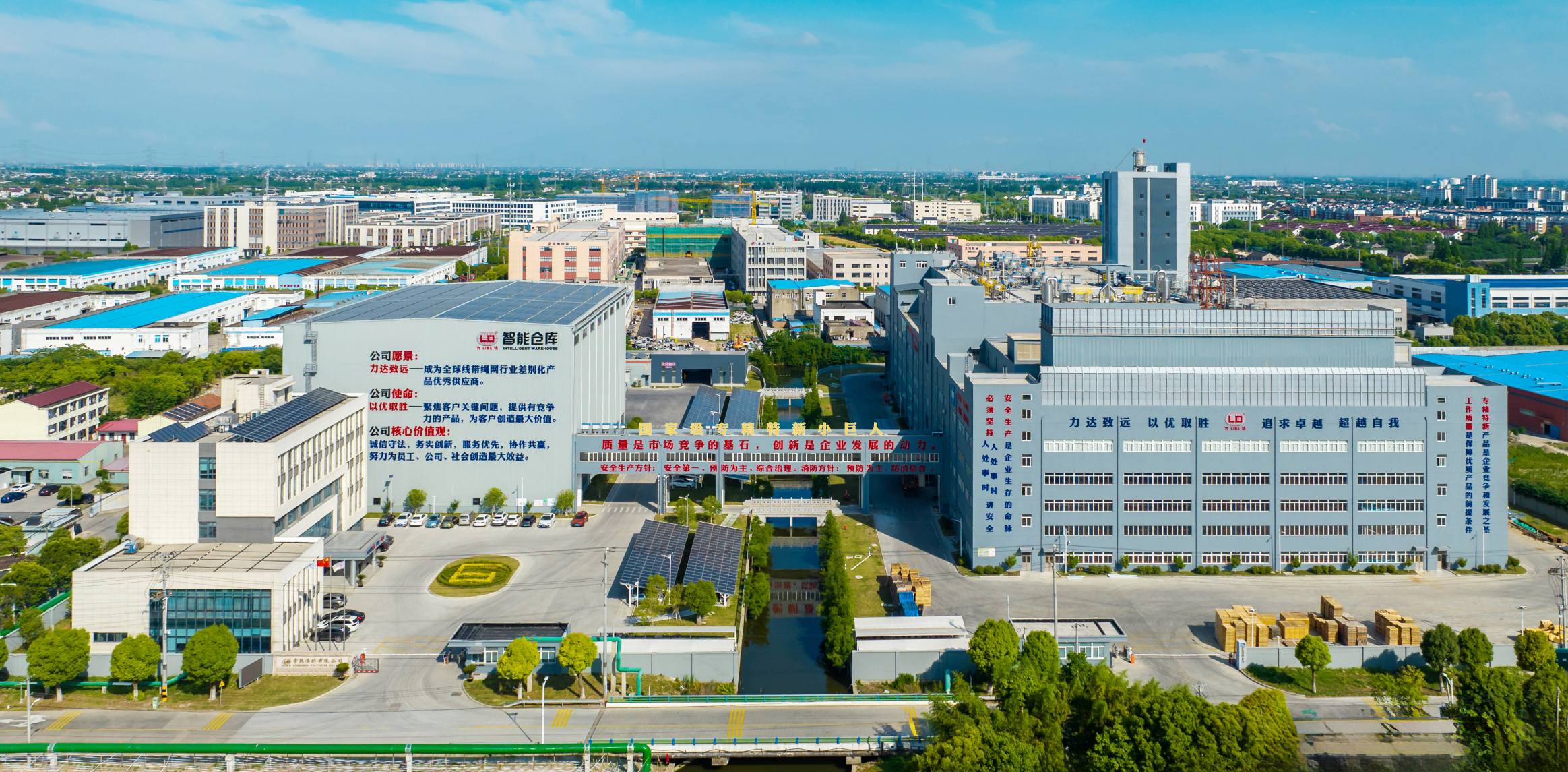
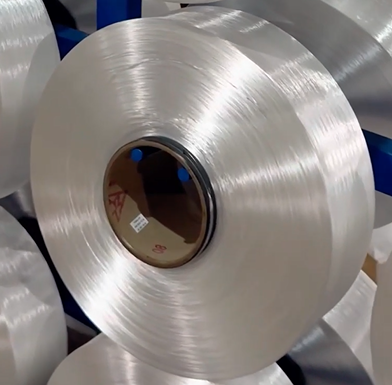
Industrial High Tenacity Polyester Filament Yarn: Unmatched Strength for Demanding Applications
2026-07-05
When it comes to heavy-duty industrial applications, not all yarns are created equal. Industrial high tenacity polyester filament yarn delivers the kind of strength that keeps operations running smoothly under extreme stress. At Changshu Polyester, we’ve engineered our yarns to withstand the toughest demands—from conveyor belts to geotextiles—without compromising on durability. Curious about what makes this material a game-changer? Let’s unravel the details.
The Anatomy of High Tenacity Polyester: What Sets It Apart
High tenacity polyester isn't your everyday fabric. At the molecular level, it's engineered with a unique arrangement of polymer chains that are stretched and aligned during a specialized spinning process. This orientation dramatically boosts the fiber's strength—often exceeding standard polyester by over 30%. The result is a material that resists tearing, withstands heavy loads, and maintains its integrity under extreme tension, making it a go-to for demanding applications like industrial slings, seat belts, and heavy-duty outdoor gear.
Beyond raw strength, its chemical backbone gives it remarkable resilience. The tight crystalline structures formed during drawing act like microscopic armor, repelling moisture, resisting abrasion, and shrugging off UV rays and mildew far better than natural fibers. This means products made from high tenacity polyester don't just last longer—they stay functional and look decent even after years of rough use. Whether it's a hiking backpack enduring torrential rain or a mooring rope under constant saltwater exposure, the material’s inertness becomes its superpower.
What really sets it apart, though, is the balance between brawn and flexibility. While some high-strength materials become stiff or brittle, this polyester retains a subtle give—enough to absorb shocks without snapping. That blend of toughness and ductility, paired with its light weight and easy dyeability, opens doors across industries. From architectural membranes that flex in the wind to high-performance sports equipment, its anatomy is purpose-built for a world that demands both muscle and adaptability.
Built for Stress: How Industrial Filaments Handle Heavy Loads
When a component has to lift, brace, or hold under extreme pressure, the filament running through the printer isn’t just a passive material—it’s the first line of defense. Engineering-grade options like polycarbonate and nylon blends ditch the brittleness of standard PLA for a molecular backbone that flexes just enough to diffuse stress without cracking. It’s a careful dance between stiffness and ductility: too rigid and layers peel apart under constant load, too soft and the whole structure sags long before reaching its design limit.
What really sets these heavy-duty filaments apart isn’t just raw tensile numbers on a datasheet, but how they behave after hours, days, or even years of sustained force. Creep resistance becomes the silent killer—slow deformations that turn a once-precise bracket into a liability. Filaments infused with carbon fiber or glass fiber don’t just add strength; they handcuff the polymer chains in place, dramatically reducing that gradual drift. Meanwhile, layer adhesion gets pushed to the limit, and a poorly bonded print can fail at a fraction of its rated capacity, no matter how exotic the base resin is.
In practice, surviving heavy loads also means shrugging off everything the environment throws at it: oil, chemicals, temperature swings that would anneal lesser plastics into warped scrap. Industrial users quickly learn that print settings are just as critical as the material choice—overcooling can lock in internal stresses, while a heated chamber turns layer boundaries into near-homogeneous walls. It’s a weird intersection of material science, machine tweaking, and real-world abuse, where a spool of filament either becomes a reliable workhorse or a lesson in why “strong enough on paper” isn’t strong enough where it counts.
From Marine Ropes to Geotextiles: Real-World Demands
The jump from marine ropes to geotextiles might seem like a stretch, but peel back the layers and you’ll find a shared backbone of brutal real-world testing. Ocean-going lines take a beating from salt spray, UV exposure, and relentless dynamic loading; geotextiles buried in roadbeds or shoreline defenses face puncture, soil chemistry, and hydrostatic pressure. Both families survive only if the materials and construction shrug off degradation without constant human fuss.
Fishermen and shipbuilders moved early onto synthetic ropes because they shed weight and corrosion worries that plagued steel wire setups. That same bias toward high-tenacity, low-maintenance synthetics spilled over into civil engineering: nonwoven geotextiles now keep aggregate layers from mixing with subgrade, while heavy woven fabrics armor coastlines against scour. In each arena, field failures taught manufacturers that a narrow focus on tensile strength alone misses the point—creep behavior, puncture tolerance, and installation toughness matter just as much.
What keeps engineers glued to these materials is their quiet reliability when conditions turn nasty. A mooring line that stretches just enough to absorb shock without snapping; a geotextile separator that stays permeable under decades of truck traffic—neither makes headlines, but both prevent catastrophes. The demands aren’t theoretical; they’re carved out of logbook entries and post-project inspections, pushing fiber makers and fabricators to tweak weave patterns, coating chemistries, and polymer blends until the gear simply works.
Chemical Resistance and Abrasion: The Long-Lasting Advantage
In environments where harsh chemicals or constant friction are the norm, materials that can withstand both are a rare find. Chemical resistance ensures that exposure to acids, solvents, or cleaning agents doesn't lead to swelling, cracking, or loss of structural integrity, while abrasion resistance guards against the slow but steady erosion caused by particulate matter, repetitive contact, or mechanical wear. Together, these properties create a synergistic shield that extends service life well beyond what standard materials can offer, drastically cutting the hidden costs of frequent replacements and downtime.
Consider the floor of a semiconductor fabrication facility, where even microscopic particles from a degrading surface can contaminate entire batches. A coating that resists both the aggressive solvents used in clean-up and the relentless scuffing of automated carts doesn't just survive—it preserves a sterile environment that's non-negotiable for yield. This isn't about surviving one dramatic event; it's about withstanding thousands of micro-assaults daily without a visible change, maintaining both function and aesthetics over decades.
What sets truly exceptional materials apart is how these resistances are engineered to work in concert. Some polymers are chemically inert but scratch easily, while some hard metals oxidize in acidic environments. The long-lasting advantage comes from formulations or composites that integrate both attributes at a molecular level, ensuring that even if the surface is breached, it doesn't become a gateway for chemical attack. In mining equipment, conveyor belt covers, or chemical storage tanks, this dual resistance translates to fewer inspections, fewer emergency repairs, and a reliability that becomes part of the workflow rather than a constant worry.
Precision Manufacturing: Every Fiber Counts
In the world of advanced textile production, precision isn't just a buzzword—it's the cornerstone of quality. Every individual fiber is accounted for, from the initial combing and alignment to the final twist of the yarn. This meticulous approach ensures that each strand meets exacting standards for thickness, strength, and consistency. By treating every fiber as a critical component, manufacturers achieve fabrics that perform flawlessly in demanding applications, whether in aerospace composites or high-performance athletic wear. The difference is tangible: a surface free from irregularities, a drape that falls perfectly, and a resilience that withstands repeated stress.
What sets this process apart is the integration of real-time monitoring and adaptive machinery. Optical sensors scan the fiber flow, detecting microscopic deviations that would be invisible to the human eye. If a single filament strays from its intended path or shows a minute variation in diameter, the system corrects it instantly—adjusting tension, alignment, or even removing the anomaly. This level of control minimizes waste and elevates the final product to a realm where imperfections are measured in microns, not millimeters. It's a dance of precision where technology and raw material merge seamlessly, yielding textiles that are truly engineered, not just woven.
But the real art lies in the cumulative effect: when every fiber is given due attention, the whole becomes greater than the sum of its parts. Fabrics gain a uniformity that enhances dye uptake, a surface smoothness that resists pilling, and a structural integrity that extends lifespan. In an industry often focused on speed and volume, this commitment to detail is a quiet rebellion—one that rewards users with products that feel distinctly luxurious and perform beyond expectations. It's not about doing more; it's about caring more about each thread that makes up the whole.
Why Strength Isn't the Only Story: Flexibility and Performance Combined
Most people chase raw power when they step into a gym, convinced that lifting heavier is the only path to progress. But fixating on strength alone can leave you stiff, sore, and more prone to injury. True physical capability comes from blending that power with suppleness—being able to move freely through full ranges of motion without strain, and to express force in every direction your body can travel. It’s not about choosing one over the other; it’s about weaving them together so that each rep, each stretch, feeds the next.
Think of a gymnast holding an iron cross or a dancer launching into a grand jeté. Those moments demand immense strength, yet they’d be impossible without extraordinary flexibility. The body needs both stability and give: tight muscles limit force production, while weak stabilizers can’t support deep stretches. By training mobility and load-bearing in tandem, you build a resilient frame that absorbs shocks, recovers faster, and performs better in sport and life—whether you’re reaching for a high shelf or sprinting for a bus.
Practically, this means ditching the all-or-nothing mindset. Swap a few static lifts for dynamic movements—overhead squats with a pause at depth, loaded carries that challenge your thoracic rotation, or controlled yoga transitions that build endurance at end range. Pay attention to how your body feels, not just what the barbell says. Over time, you’ll find yourself moving with a quiet ease that turns heads more than a one-rep max ever could. Strength stops being a number and becomes a fluid, adaptable presence in everything you do.
FAQ
Its exceptional tensile strength and durability allow it to withstand heavy loads and harsh conditions, making it ideal for demanding industrial applications.
The yarn has excellent resistance to moisture, mildew, and most chemicals, so it remains stable and strong where other materials might degrade.
It is widely employed in geotextiles, automotive fabrics, conveyor belts, ropes, protective gear, and reinforced composites.
Yes, its high UV resistance ensures long-lasting performance even under prolonged sunlight exposure.
It offers lower elongation, better dimensional stability, and is generally more cost-effective while still providing comparable strength.
Manufacturers supply it in a wide range of deniers and filament configurations to meet specific performance and processing needs.
Its abrasion and fatigue resistance reduce wear and tear, extending the service life of the final product significantly.
Consistent quality, high processability, and the balance of strength and flexibility enable efficient production of reliable, high-performance goods.
Conclusion
Industrial high tenacity polyester filament yarn stands at the intersection of molecular engineering and real-world performance, delivering strength that reshapes how demanding industries approach load-bearing materials. Its secret lies in the polymer chains themselves—tightly aligned and highly crystallized during extrusion and drawing, yielding fibers with tenacities far surpassing standard polyester. This structural precision means the yarn doesn't just resist breaking; it actively distributes stress across countless continuous filaments, absorbing sudden shocks and static loads alike. In marine ropes that secure massive vessels or in geotextiles stabilizing unstable soils, the yarn's ability to handle heavy, fluctuating forces is not an added feature but a fundamental trait, rooted in every micron of fiber. Even in harsh environments, the material's inherent chemical inertness and abrasion resistance extend service life dramatically, outperforming alternatives that degrade under UV exposure, saltwater, or constant friction.
What truly sets this yarn apart, however, is the interplay between strength and flexibility—a balance refined through precision manufacturing processes that control denier, twist, and finish with exacting tolerances. Unlike rigid high-strength materials that sacrifice handling or knotability, high tenacity polyester can be woven, braided, or twisted into complex forms while retaining its core toughness, making it ideal for safety harnesses, conveyor belts, and inflatable structures where reliability under stress is non-negotiable. Modern production techniques ensure every filament contributes to the whole, minimizing weak points and guaranteeing batch-to-batch consistency that engineers depend on. This marriage of raw power and adaptable performance, backed by decades of fiber science, explains why industrial high tenacity polyester yarn remains the go-to solution for applications where failure is not an option. From deep-sea mooring to landslide reinforcement, it quietly upholds the infrastructure and activities that keep our world moving.
Contact Us
Contact Person: CONNIE
Email: [email protected]
Tel/WhatsApp: 86-0512-53671634
Website: https://www.lida-yarn.com/