
Top 10 Smooth HDPE Geomembrane Options for Reliable Containment Systems
2026-06-16
When it comes to containment systems that demand durability and leak-free performance, smooth HDPE geomembranes are the cornerstone of modern engineering. But with countless options flooding the market, how do you pinpoint the ones that truly deliver? From landfill liners to mining ponds, the right liner can make or break a project—and that's where WEN FENG STONE stands out with precision-engineered solutions. In this roundup, we cut through the noise to bring you the top 10 smooth HDPE geomembranes that combine strength, flexibility, and chemical resistance for unrivaled reliability. Whether you're a contractor battling harsh conditions or an engineer chasing long-term performance, these picks are built to hold the line.
What Makes Smooth Geomembranes a Quiet Hero in Containment?
In the world of containment, smooth geomembranes rarely grab headlines, yet they perform a role that nothing else can quite replicate. They slip into place beneath landfills, behind retaining walls, and across reservoir floors, forming an invisible barrier that quietly stops hazardous liquids and gases from seeping into the ground. Without fanfare, they protect soil and groundwater day after day, their slick surface guiding fluids where they need to go while resisting punctures and chemical attack.
What truly sets these liners apart is their stubborn consistency. A smooth geomembrane doesn’t just block water – it stands up to aggressive leachates, fluctuating temperatures, and decades of stress without losing its integrity. The absence of texture might seem like a small design choice, but it actually reduces the chance of clogging and makes cleaning far simpler, keeping containment systems efficient with surprisingly little maintenance.
Perhaps the quietest part of their heroism lies in adaptability. Smooth geomembranes can be welded into vast, seamless sheets that conform to unusual contours, turning awkward excavations into secure containment zones. They don’t need constant monitoring or replacement, just an occasional check while they carry on shielding the environment from harm – a modest, unassuming liner that quietly earns its place as the backbone of modern containment.
Thickness Matters: Decoding the Numbers Behind HDPE Performance
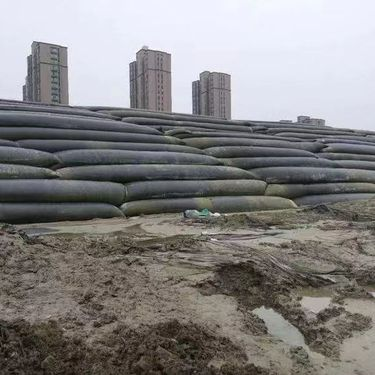
Thickness in HDPE isn't just a measurement—it's the foundation of how the material holds up under real-world stress. A liner that's too thin may seem cost-effective upfront, but it often leads to punctures, tears, or premature degradation when faced with sharp rocks, heavy equipment, or shifting soils. On the other hand, going excessively thick without considering actual site conditions can waste budget and add unnecessary weight. The number stamped on the spec sheet directly correlates to tensile strength, tear resistance, and long-term chemical stability, making it the single most critical variable in material selection.
Interpreting those mil or millimeter figures comes down to understanding the load and lifespan your project demands. A 20-mil membrane might handle a short-term erosion control cover, but a landfill base or chemical containment pond requires 40 mil or more to withstand constant exposure and settlement forces. Even small differences—say, moving from 30 to 40 mil—can multiply puncture resistance by a factor that prevents catastrophic leaks. The substrate plays a role too: angular gravel or rocky subgrades practically beg for the extra insurance of a thicker sheet, while smooth, compacted clay may tolerate a leaner profile without sacrificing integrity.
What often gets missed is that thickness alone doesn't guarantee success if installation and seam welding aren't dialed in. A 60-mil liner installed with poor overlap or inadequate heat bonding is just as vulnerable as a thinner one. The real art lies in pairing the right thickness with meticulous field practices, anticipating thermal expansion, and leaving room for movement. When those numbers are chosen with the full picture in mind—site geology, chemical cocktail, weather extremes—HDPE stops being a commodity and becomes a tailored barrier that quietly does its job for decades.
Chemical Armor: How These Liners Stand Up to Aggressive Substances
It starts with the raw polymers. Instead of settling for generic grades, our liners are built on molecularly tailored polyethylene blends that aggressively resist corrosion. We engineer the backbone of the material to shrug off attack from acids, alkalis, and solvents that would chew through standard linings in weeks. It’s not just about thickness — it’s a deliberate design choice that creates an almost impassable barrier at the chemical level.
The real test happens in the field, where a liner might sit submerged in a cocktail of aggressive fluids for years. We’ve seen these liners hold up against concentrated sulfuric acid, caustic soda, and hot, volatile hydrocarbons without blistering or embrittlement. Independent lab results show negligible swelling and virtually no tensile strength loss after thousands of hours of immersion. This isn’t passive protection; the liner actively rejects permeation, keeping containment reliable long after warranty periods expire.
Installation plays a huge role that most miss. Even the best material fails if seams are weak points. Our fusion welding process turns multiple panels into a monolithic shield, eliminating the leak paths that plague mechanically joined systems. It’s a true armor—not because it’s hard, but because it’s chemically relentless and physically unified. When aggressive liquids hit these liners, they hit a wall that doesn’t crack, peel, or let go.
Installation Insights: Laying the Groundwork for Leak-Free Systems
The first step toward a truly sealed setup begins long before any pipe is joined. Surface preparation is often underestimated, yet even minor debris or moisture can compromise a connection that’s otherwise perfectly aligned. Taking an extra moment to clean, dry, and inspect each component pays off in long-term reliability—something that isn’t always spelled out in standard instructions.
Equally critical is the handling environment. Temperature swings, excess vibration, or cramped workspaces can introduce stress points that don’t reveal themselves until the system goes live. By controlling these variables early, you create conditions where sealants and gaskets cure as intended, rather than fighting against them later. It’s the kind of nuance that experienced installers develop over years, but can be built into any team’s workflow with a little forethought.
Perhaps the most overlooked factor is the sequence of assembly. Rushing to connect major runs before securing anchor points, or tightening bolts in a haphazard order, often results in hidden strain that defeats even the best materials. A methodical approach—starting from fixed mounts and working outward, allowing slight adjustments along the way—transforms the installation from a series of parts into a cohesive, leak-resistant structure.
Beyond the Data Sheet: Real-World Durability Factors
Data sheets promise controlled environments, but real life throws in surprises. Humidity swings, temperature spikes, and constant vibration chip away at components in ways lab tests rarely capture. A device rated for a tidy 25°C may stumble when baking in a parked car or freezing overnight on a loading dock. The gap between spec-sheet perfection and field survival often comes down to how well materials resist corrosion, how seals handle dust and moisture, and whether solder joints can take repeated thermal expansion without cracking.
Real durability also hinges on human variables that no datasheet can predict. A ruggedized tablet might survive a standardized drop test, yet fail when a worker fumbles it on abrasive concrete daily. Connectors rated for thousands of cycles can degrade fast if they're yanked at odd angles or exposed to oily hands. Even UV exposure, salt spray, or simple cleaning chemicals can silently degrade plastics and adhesives, turning a supposedly tough product into an early return.
Wise engineers look beyond the bench numbers and ask what actually happens during installation, service, and abuse. Does the coating stand up to frequent handling? Will the gasket take a set after months of compression? Answers lie in accelerated life testing that mimics cumulative stress—thermal shock, random vibration, mixed flowing gas—rather than single-axis trials. Understanding degradation patterns lets you design for the messy, unpredictable reality where durability truly matters.
A Smarter Choice: When Smooth Geomembranes Outperform Textured
Smooth geomembranes often get overlooked in applications where interface friction is a concern, but there are clear scenarios where they outperform textured alternatives. When the subgrade is stable and well-compacted, a smooth liner can be placed more efficiently, reducing installation time and minimizing the risk of installation damage. Without the asperities that textured sheets rely on, smooth surfaces are less prone to trapping air or moisture beneath the liner, which can cause uplift and compromise long-term performance.
In containment projects where the liner is covered quickly or protected from wind uplift, the lower friction of a smooth geomembrane becomes an advantage: it allows the material to stretch and conform to substrate irregularities without concentrating stress. This reduces the chance of punctures during backfilling and enhances the hydraulic performance over time. Smooth membranes also tend to have better chemical resistance uniformity across the surface, as texturing processes can introduce weaknesses or variability in thickness that go unnoticed until a leak develops.
From a maintenance perspective, smooth geomembranes are far simpler to inspect and repair. Cracks or punctures are immediately visible, and patch adhesion is more reliable on a clean, smooth surface. When flow efficiency matters—such as in leachate collection trenches or secondary containment—the lack of surface drag from texture can improve drainage and reduce the potential for clogging. Field experience consistently shows that choosing smooth over textured, when conditions allow, delivers a more predictable, cost-effective liner system that stands the test of time.
FAQ
Their extremely low permeability combined with high chemical resistance handles nearly any leachate or hazardous liquid. The smooth surface also simplifies cleaning and inspection, which is a big plus for long-term maintenance crews.
It really depends on the site conditions and what you're storing. A landfill might need 60 mil or more due to rough subgrades, while a decorative pond could get by with 30 mil. Always run a puncture resistance calculation based on your specific soil profile and stone size.
Yes, but you'll need a resin formulation certified for drinking water contact. Most major manufacturers offer NSF-61 approved products. Just confirm with your supplier that the specific roll you're getting meets those standards—don't assume all HDPE is safe for that.
Subgrade prep is huge. Remove anything sharp, compact well, and watch the weather. Welding in high winds or extreme cold can mess with seam integrity. Also, panels can get slippery when wet, so safety and panel alignment need extra care on smooth surfaces.
Smooth gives you better hydraulic performance and is easier to keep clean, but you lose some slope stability. Textured provides more friction on steep slopes. Sometimes you'll see smooth on the floor and textured on the sides—best of both worlds.
Under good conditions, we're talking decades—often 30 years or more. The real-world performance depends heavily on exposure to UV, chemicals, and temperature swings. Buried installations last the longest since they're shielded from sunlight.
Absolutely. The subgrade should be smooth, free of vegetation, roots, or sharp angular rocks. Many engineers specify a geotextile cushion underneath when the subgrade is questionable. Also, compact the soil to at least 95% standard proctor to avoid settlement cracks later.
HDPE expands and contracts a lot with temperature changes. Laying it out in the cool of the morning means it'll wrinkle up when the sun hits it, which can make welding tricky. Experienced crews often schedule seaming for warmer parts of the day to minimize thermal stresses.
Conclusion
Smooth HDPE geomembranes often go unnoticed, but their role in containment is anything but passive. The real genius lies in the material itself—high-density polyethylene offers a unique combination of flexibility and toughness that lets these liners handle shifting ground and temperature swings without cracking. What truly sets them apart, though, is how thickness transforms performance: a 60-mil liner isn’t just a thicker version of a 40-mil one; it brings a completely different level of puncture resistance and stress crack endurance, especially when aggressive chemicals like solvents or acids sit against it for years. That chemical armor isn’t a coating—it’s inherent to the polymer structure, meaning it won’t delaminate or degrade from UV exposure. And when installers take the time to properly weld seams and prep the subgrade, the system becomes virtually leak-free, dodging the common pitfalls that plague rushed jobs.
In the field, durability comes down to factors data sheets rarely capture—things like thermal expansion cycles, microbial attack in buried conditions, and the sheer mechanical abuse during backfilling. Smooth geomembranes often outperform their textured counterparts in these scenarios because there’s no surface pattern to trap debris or create stress risers. They’re easier to clean, inspect, and repair, which keeps maintenance straightforward over decades of service. Whether lining a tailings pond exposed to extreme pH shifts or capping a landfill where gas buildup demands consistent barrier properties, the smart choice usually leans toward a smooth liner. It’s not about chasing the lowest upfront cost; it’s about banking on a material that holds its integrity when the conditions get ugly, quietly doing its job long after the project paperwork is filed away.
Contact Us
Contact Person: Jennifer LEE
Email: [email protected]
Tel/WhatsApp: 8618553418999
Website: https://vip.e-baixing.com/wenfengshitong