
Uniaxial Geogrid Factory: Engineering Stronger Foundations for Sustainable Construction
2026-05-19
In the push for greener infrastructure, the unnoticed hero beneath our roads and buildings is often the simplest: a grid that locks soil in place. At WEN FENG STONE, we engineer uniaxial geogrids that don’t just reinforce—they redefine how foundations hold strong while using fewer resources. Curious how a factory focused on one direction can push construction forward?
The Engineering Behind Uniaxial Geogrids
Uniaxial geogrids are designed to withstand tensile forces in one primary direction, making them indispensable in retaining walls and steep slope reinforcement. The manufacturing process stretches extruded polymer sheets under controlled heat to align the molecular chains along the drawing axis. This molecular orientation dramatically boosts stiffness and tensile strength while reducing creep under sustained loads. The apertures allow soil particles to interlock, creating a composite mass that resists pullout and distributes stress efficiently.
The ribs and junctions of uniaxial grids are engineered with specific shapes and thicknesses to maximize interface shear resistance. Unlike biaxial variants, these grids sacrifice transverse strength to concentrate material where it matters most. Advanced polymers like high-density polyethylene are often augmented with carbon black for UV stabilization, ensuring decades of service life even in harsh environments. The interplay of rib profile, aperture size, and polymer formulation is carefully calibrated through extensive laboratory testing and field performance data.
Modern design methods treat the grid-reinforced soil as a coherent structure, relying on factors like the coefficient of interaction and long-term design strength. Engineers account for installation damage, creep, chemical degradation, and biological effects when specifying the product. Full-scale pullout tests and numerical modeling validate that the grid's engineering translates directly to safer, more cost-effective slopes and walls that would otherwise be unbuildable with soil alone.
Strengthening Infrastructure with Advanced Polymer Technology
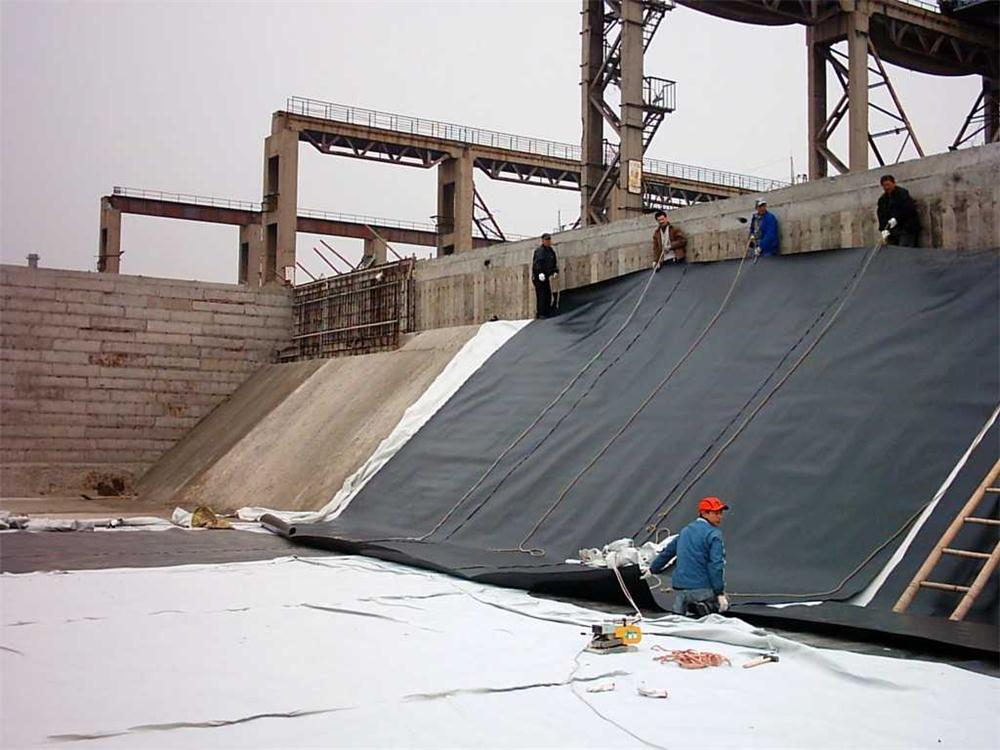
Modern infrastructure systems are increasingly reliant on materials that can withstand harsh environmental conditions while reducing long-term maintenance costs. Advanced polymer technology has emerged as a key solution, offering exceptional resistance to corrosion, chemical exposure, and physical wear. Unlike traditional materials such as steel and concrete, these engineered polymers maintain structural integrity over decades, even in highly corrosive marine or industrial settings. Their lightweight nature also simplifies transportation and installation, cutting project timelines and labor expenses without compromising load-bearing capacity.
The versatility of polymer-based composites allows for tailored performance characteristics that conventional materials simply cannot match. By adjusting fiber reinforcements and resin formulations, engineers can fine-tune properties like flexibility, thermal stability, and impact resistance to meet specific project demands. This adaptability has proven invaluable in seismic retrofitting, bridge deck overlays, and underground piping systems where dynamic stresses and chemical attacks are constant challenges. Additionally, the seamless application of polymer coatings creates impermeable barriers that extend the lifespan of existing structures, delaying costly replacements.
Another decisive advantage lies in the sustainability profile of advanced polymers. Their production typically requires less energy than steel or cement manufacturing, and their extended service life means fewer resources are consumed over a structure's lifetime. When decommissioning becomes necessary, many polymer composites can be repurposed or broken down through emerging recycling processes, reducing landfill burden. As climate change intensifies extreme weather events, infrastructure fortified with polymer technology offers a resilient, future-ready alternative that aligns with both economic and environmental goals.
Sustainability at the Core of Geogrid Production
True sustainability in geogrid manufacturing begins long before the product reaches a construction site. It's woven into decisions about raw material selection, energy use, and process efficiency. Instead of simply ticking boxes for recycled content, leading manufacturers are rethinking polymer formulations to reduce reliance on virgin petrochemicals, often incorporating post-industrial or even post-consumer recycled polymers without compromising long-term tensile strength. The real innovation lies in how these materials are processed—modern extrusion lines can be fine-tuned to minimize thermal degradation, which not only extends the service life of the geogrid but also cuts energy consumption per square meter. By viewing waste as a design flaw, production teams continually refine cooling, drawing, and punching operations so that off-spec material is virtually eliminated, and any unavoidable scrap is fed back into the system rather than sent to landfill.
Another dimension often overlooked is the carbon handprint of geogrids—the positive impact they enable in infrastructure projects. When geogrids allow engineers to use thinner pavement layers, reduce aggregate thickness, or stabilize slopes with locally sourced fill instead of imported stone, the total embodied carbon of a project can drop significantly. Factoring this into design means sustainability isn't just about how the grid is made, but how it lets the whole construction process become leaner. Some producers now offer life-cycle assessments for specific product lines, making it easier for project owners to compare options not by price alone, but by overall environmental footprint. This shift is quietly pushing the industry toward solutions that work with less, do more, and last longer—without fanfare, just practical engineering.
Water and chemical stewardship also form a quiet backbone of responsible geogrid production. Unlike some construction materials that require large volumes of fresh water for processing or curing, geogrid manufacturing typically uses closed-loop cooling systems that recirculate water, dramatically lowering withdrawal from local sources. When coatings or additives are needed for UV resistance or bonding, manufacturers are increasingly opting for chemistry that meets stringent environmental health standards, avoiding substances of concern before regulations force their hand. It's a proactive approach that prioritizes long-term soil and groundwater safety, particularly in sensitive applications like coastal reinforcement or agricultural drainage. These behind-the-scenes choices rarely make headlines, but they represent a genuine commitment to producing reinforcement materials that don't mortgage the future.
Applications That Redefine Foundation Stability
Modern engineering has pushed beyond conventional concrete footings and pilings, introducing adaptive systems that actively sense and respond to shifting soils. From self-leveling micropiles that adjust to subtle settling to electro-osmotic pulse technology that dries and solidifies saturated ground in real time, these innovations treat the ground not as a passive slab but as a dynamic partner. The result is a foundation that can heal minor cracks before they spread, and alert building owners to emerging risks long before visible damage appears.
Coastal and seismic zones are witnessing a quiet revolution with deep soil mixing and helical anchors paired with vibration-dampening polymers. Instead of fighting lateral forces, buildings now ride them, dissipating kinetic energy through engineered interfaces between the structure and the earth. Bio-inspired designs mimic root systems or mangrove tangles, offering both anchoring and self-repairing capabilities, which dramatically reduces maintenance cycles in harsh environments.
Perhaps the most practical leap is the integration of wireless sensor meshes into foundation layers. These networks map pressure, moisture, and temperature shifts with millimeter-level accuracy over an entire building’s footprint. Paired with digital twins, the data enables predictive maintenance schedules and real-time safety assessments that make static load calculations seem archaic. What was once a buried unknown is now an actively managed asset, redefining what it means to build on solid ground.
Precision Manufacturing for Consistent Performance
Every component we produce begins with an uncompromising focus on dimensional accuracy. Our facilities employ multi-axis CNC machining centers and advanced metrology systems that monitor tolerances down to the micron level, ensuring each part meets exact specifications. This meticulous control eliminates variability from the very first unit to the hundred-thousandth, giving you a product line that performs identically across every batch.
The consistency of our output is reinforced by closed-loop process controls that adjust tool wear and environmental factors in real time. Instead of relying on post-production sorting, we embed quality into the manufacturing cycle itself. Statistical process controls track key parameters continuously, flagging deviations before they become defects. The result is a repeatable, low-scrap workflow where performance predictability is engineered into the process, not just inspected at the end.
We also combine time-tested craftsmanship with digital twin simulations to refine production steps before cutting metal. By virtually modeling each operation, we identify optimal speeds, feeds, and tool paths that maximize uniformity. This fusion of simulation and hands-on expertise means that whether you receive ten units or ten thousand, each one delivers the same fit, finish, and function—without the gradual drift that plagues conventional manufacturing.
Future-Ready Solutions for Modern Construction Challenges
The construction landscape is shifting beneath our feet, demanding more than just brick-and-mortar approaches. Today's projects grapple with material shortages, extreme weather, and tighter deadlines. To stay ahead, builders are turning to solutions that weave resilience into every phase—from design software that simulates decades of wear in seconds, to onsite robotics that keep work moving without fatigue. These aren't futuristic dreams; they're practical responses to real-world pressures, quietly reshaping how structures rise from the ground.
Beyond efficiency, what truly defines future-ready thinking is an obsession with adaptability. Walls that self-heal cracks, foundations that monitor their own integrity, and modular components that can be swapped out like building blocks—these innovations turn buildings into living systems. It's not just about surviving the next earthquake or flood, but about creating spaces that evolve with the needs of their occupants. The focus has shifted from what a building is on day one to what it becomes over a lifetime, dramatically cutting waste and downtime along the way.
At the core of this transformation lies a quieter revolution: data-driven decision-making that leaves guesswork behind. Sensors embedded in concrete and steel feed real-time insights back to project teams, flagging potential issues long before they become costly emergencies. When combined with on-demand manufacturing and local material sourcing, this intelligence slashes carbon footprints while keeping projects on track. It's a far cry from the paper-blueprint era—a nuanced, connected approach where every choice is measured, and resilience is built in from the very first sketch.
FAQ
They are engineered to reinforce soil and aggregate, creating stronger, more stable foundations for construction projects.
Through rigorous raw material selection, advanced manufacturing processes, and continuous testing at every production stage.
They are widely applied in roadways, embankments, retaining walls, and slope stabilization, especially where soil conditions are challenging.
By extending the lifespan of structures and reducing the need for excessive excavation and imported fill, they minimize environmental impact.
Yes, the production lines can adjust tensile strength, aperture size, and roll dimensions to meet specific engineering needs.
Technical guidance, installation training, and on-site assistance are provided to ensure optimal performance and integration with other building materials.
Conclusion
At the core of modern infrastructure lies the uniaxial geogrid factory, a hub where advanced polymer technology meets precision engineering to deliver solutions that redefine foundation stability. The manufacturing process transforms high-density polyethylene into high-strength grids through controlled stretching, creating a product that interlocks with soil and aggregate. This mechanical reinforcement distributes loads over a wider area, effectively strengthening retaining walls, embankments, and steep slopes. By integrating rigorous quality checks at every stage, from raw material selection to final testing, the factory ensures consistent performance that engineers can rely on—even in challenging soil conditions. The result is a robust foundation system that extends the lifespan of roads, railways, and other critical structures while minimizing maintenance needs.
Sustainability is woven into every strand of the production cycle. The factory prioritizes eco-efficient methods, utilizing recycled materials and reducing energy consumption without compromising on tensile strength or durability. This commitment to greener construction is matched by a forward-looking approach: geogrids are designed to withstand extreme weather, seismic activity, and heavy traffic, making them a future-ready solution for the demands of tomorrow’s cities. Applications range from reinforced soil walls to landfill base reinforcement, each demonstrating how a simple geosynthetic can drastically cut carbon footprints by reducing concrete and steel usage. In essence, these factories are not just manufacturing products—they’re engineering resilient, sustainable foundations that underpin a more responsible built environment.
Contact Us
Contact Person: Jennifer LEE
Email: [email protected]
Tel/WhatsApp: 8618553418999
Website: https://vip.e-baixing.com/wenfengshitong